Bush bean ‚Marona‘ (Phaseolus vulgaris) – seeds
$ 2.57
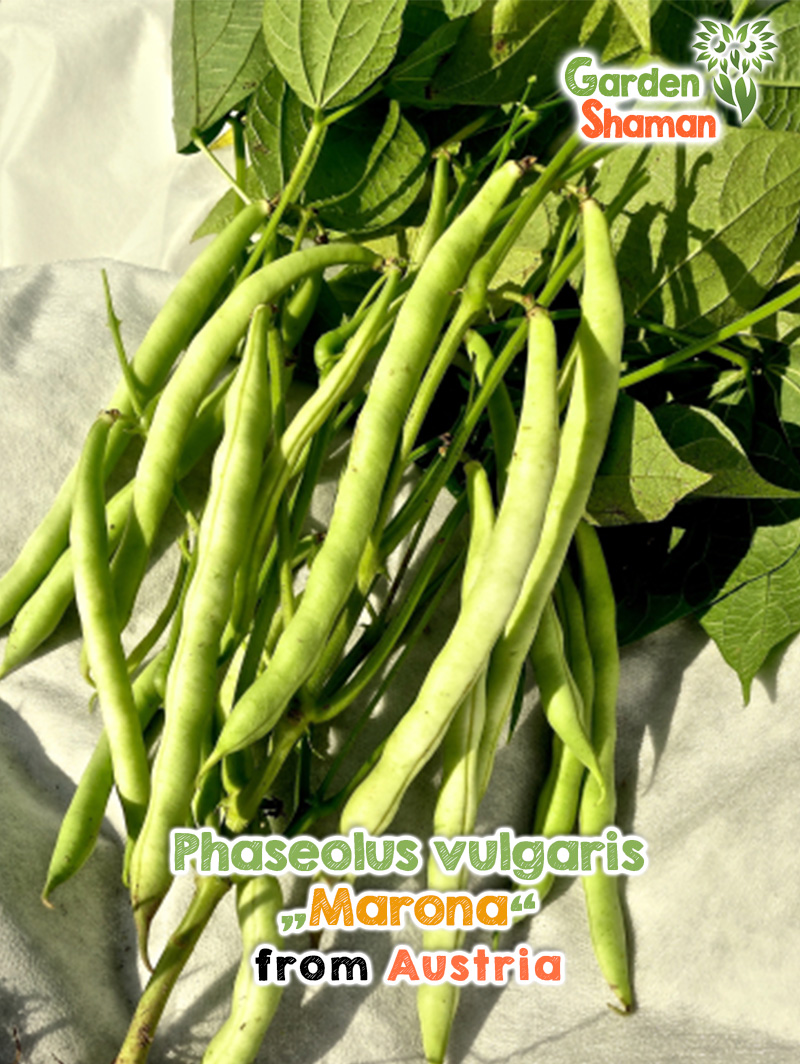
Description Bush bean ‚Marona‘ (Phaseolus vulgaris) – seeds Seed information Origin: Austria Harvesting the seeds: 2025 Germination period: 8–14 days at 18–25 °C. Each packet contains approx. 15 seeds. Larger quantities available on request. Information on the species Family: Fabaceae (leguminous plants) Synonyms: Garden bean ‚Marona‘, green bush bean, Phaseolus vulgaris ‘Marona’ Occurrence: Cultural form originating in Central Europe Type of use: Vegetable plant / Legume The bush bean Phaseolus vulgaris ‘Marona is a tried-and-tested, traditional German variety with dark green, tender pods and a delicate flavor. This early and high-yielding bean is one of the most popular varieties for growing in home gardens and is known for its uniformly long, stringless pods. It is ideal for eating fresh, freezing, or as a delicate ingredient in summer vegetable dishes. The plants grow compactly, robustly, and sturdily, reaching a height of about 45 cm and producing abundant harvests over a long period of time. ‘Marona’ is considered extremely adaptable, easy to care for, and resistant to leaf spot disease and bean mosaic virus—a true classic among bush bean varieties. Sowing instructions �� Sowing time: From mid-May to July, as soon as the ground is frost-free Germination period: 8–14 days at 18–25 °C Seeding depth: 2–3 cm Substrate: Loose, humus-rich, well-drained garden soil Location: Sunny to semi-shady Pouring: Keep evenly moist, avoid waterlogging Planting distance: 30 × 40 cm or row spacing 40 cm �� Tip: For a continuous harvest, resow every 2–3 weeks. Bush beans love warmth—protect the soil with fleece for early sowing. A well-drained, easily warmed location promotes germination and yield. Use & meaning �� ‘Marona is one of the most popular green bush beans in Central Europe – ideal for eating fresh, steaming, blanching, or preserving. Their pods are round, about 5–6 inches long, and retain their rich green color when cooked. The Bush bean ‘Marona’ Impresses with its pleasantly mild aroma and consistent texture—perfect for bean salads, vegetable stir-fries, or as a side dish for summer meals. In home gardening, it stands for reliability, easy care, and high yield. Its resistance to disease also makes it suitable for organic cultivation. As protein-rich legume It also contributes to natural nitrogen enrichment in the soil—an ecological advantage for any self-sufficient garden. Tips & tricks for hobby gardeners �� Regular harvesting prolongs the fruiting phase and promotes new flower formation. Do not consume beans raw—they contain natural lectins that are broken down during cooking. Ideal for mixed crops with cabbage, celery, or cucumbers. In the fall, work plant residues into the soil as natural green manure. By reseeding every few weeks, the harvest can be extended into September. Worth knowing �� The Bush bean ‘Marona’ is a traditional cultivar that has been grown in Germany since the 1960s. It was originally developed for professional vegetable cultivation, but due to its outstanding taste and reliability, it quickly found its way into home gardens. Botanically, it belongs to the species Phaseolus vulgaris, which originally comes from Central and South America and has been cultivated in Europe since the 16th century. ‘Marona is a prime example of classic Garden beans: robust, high-yielding, and easy to care for. Their compact growth and uniform pods make them ideal for small beds or raised beds. Ecologically valuable, it binds nitrogen in the soil and improves the soil structure for subsequent crops. If you are looking for a reliable, aromatic, and uncomplicated bean, ‘Marona’ is one of the best varieties for the self-sufficient gardener—down-to-earth, nutritious, and excellent in taste. �� Free seeds with every order! ℹ️ Important note Despite careful checks (germination capacity, storage, freshness), we cannot guarantee germination - too many external factors play a role in cultivation. Please inform yourself before purchase about the laws and import regulations applicable in your country. Where permitted, our seeds are intended exclusively for plant propagation. You can find further information in our terms and conditions or directly by e-mail: [email protected] ��