Palo Santo tree (Bursera graveolens) seeds - Rarity!
$ 99.23
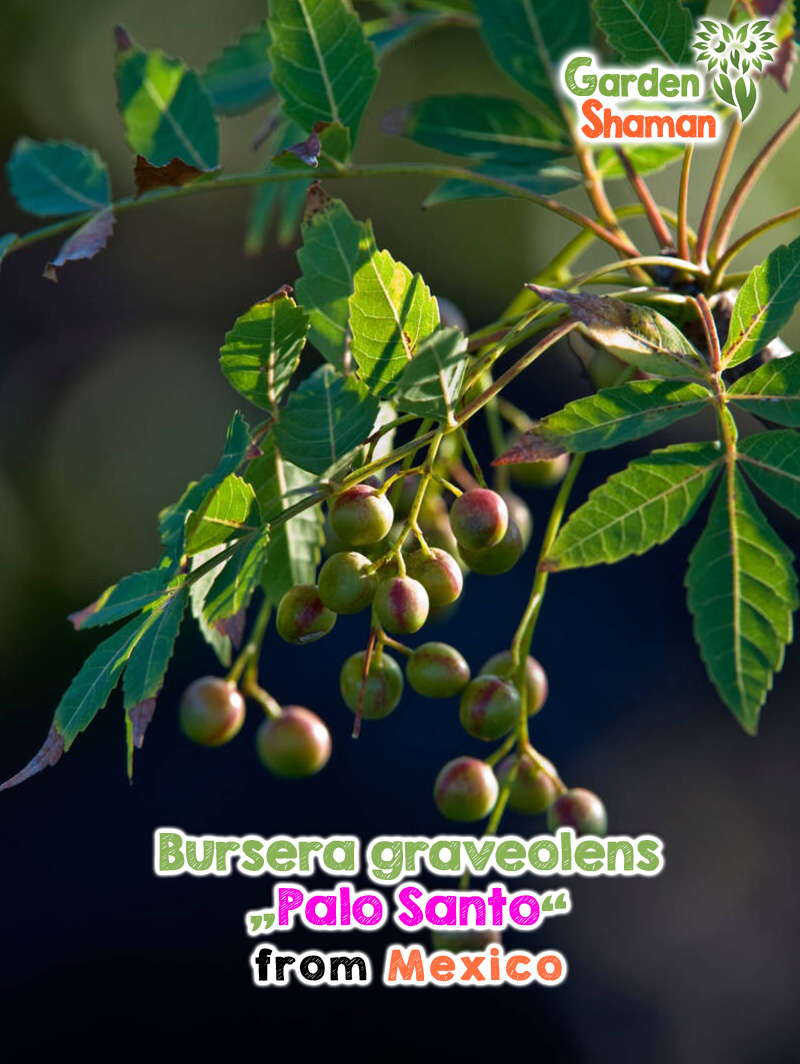
Description Palo Santo (Bursera graveolens) – Seeds Here you can find our BLOG post on Bursera graveolens! Seed information Origin: Mexico Harvesting the seeds: 2025 Germination period: 14–40 days at 24–30 °C seeds per serving: You can choose between 3, 5, and 10 seeds – larger quantities available on request! Information on the species Family: Burseraceae (balsam tree family) Synonyms: Elaphrium graveolens, Allium graveolens Original origin: Arid regions of the Andes (Ecuador, Peru, northern Argentina) Type of use: Incense, ritual, and ornamental plant General description �� Bursera graveolens, better known as Palo Santo („holy wood“), is a semi-dry, evergreen to semi-deciduous tree from the Burseraceae family. Depending on its location, it reaches a height of 3–12 m and forms a light-colored, smooth bark that exudes an aromatic, resinous scent when scratched. The leaves are pinnate and give off a warm, lemony aroma when touched. In its native habitat, Palo Santo grows in the dry forests of South America's coastal regions and survives long periods of drought thanks to its high adaptability. It is characterized by small, aromatic fruits that release hard, oil-rich seeds when ripe – the basis for the wood's intense fragrance. Cultivation & care �� Palo santo seeds germinate reliably at constant warm temperatures of 24–30 °C. Before sowing, soak the seeds in lukewarm water for 24 hours, then place them in a permeable, mineral substrate (e.g., sand coco humus perlite). Cover lightly and keep moist, but not wet. Germination takes 2–6 weeks. Young plants prefer full sun to partial shade and a dry, warm climate. Avoid waterlogging at all costs! In Central Europe, the plant is suitable for growing in pots, which can be kept outside from April to October and stored in a bright, warm place over winter. The tree is extremely robust, drought-resistant, and over time develops the typical resinous scent that makes Palo Santo so characteristic. Use �� Palo Santo has a long and deep ethnobotanical significance. For centuries, the aromatic wood has been used in traditional Andean and coastal cultures for incense, ceremonies, and purification rituals. The warm, balsamic scent of the wood is considered a symbol of harmony, protection, and renewal. Even without being used for incense, the plant is a decorative addition to Mediterranean, ethnobotanical, and collector's gardens: its shiny, feathery leaves, characteristic growth, and delicate resin scent make it Bursera graveolens into an exotic highlight. In modern natural cosmetics, the essential oil from the aged wood is used for perfumes, aromatherapy, and incense blends. As a potted plant, the tree is a fascinating example of drought-tolerant, resin-forming species of the Burseraceae family. Worth knowing �� The name „Palo Santo“ means „holy wood“ and refers to the centuries-old spiritual appreciation of the tree. In the indigenous traditions of Ecuador and Peru, it is revered as a protective tree that is said to dispel negative energies and purify places. Ethnobotanically, it is one of the most important ritual plants of the Andean coast, comparable to myrrh and frankincense, which also come from the same plant family. Biologically remarkable is its ability to develop only dead, naturally aged wood with a high oil concentration—a process that takes several years and produces the characteristic fragrance intensity. Sustainable use is therefore ensured exclusively by collecting naturally fallen old wood. As a houseplant or container plant, Palo Santo is a living symbol of South America's resin and fragrance culture – a plant steeped in history, mythology, and natural elegance. �� Free seeds with every order! ℹ️ Important note Despite careful checks (germination capacity, storage, freshness), we cannot guarantee germination - too many external factors play a role in cultivation. Please inform yourself before purchase about the laws and import regulations applicable in your country. Where permitted, our seeds are intended exclusively for plant propagation. You can find further information in our terms and conditions or directly by e-mail: [email protected] ��