Long-leaved frankincense tree (Boswellia elongata) seeds - Rarity!
$ 30.77
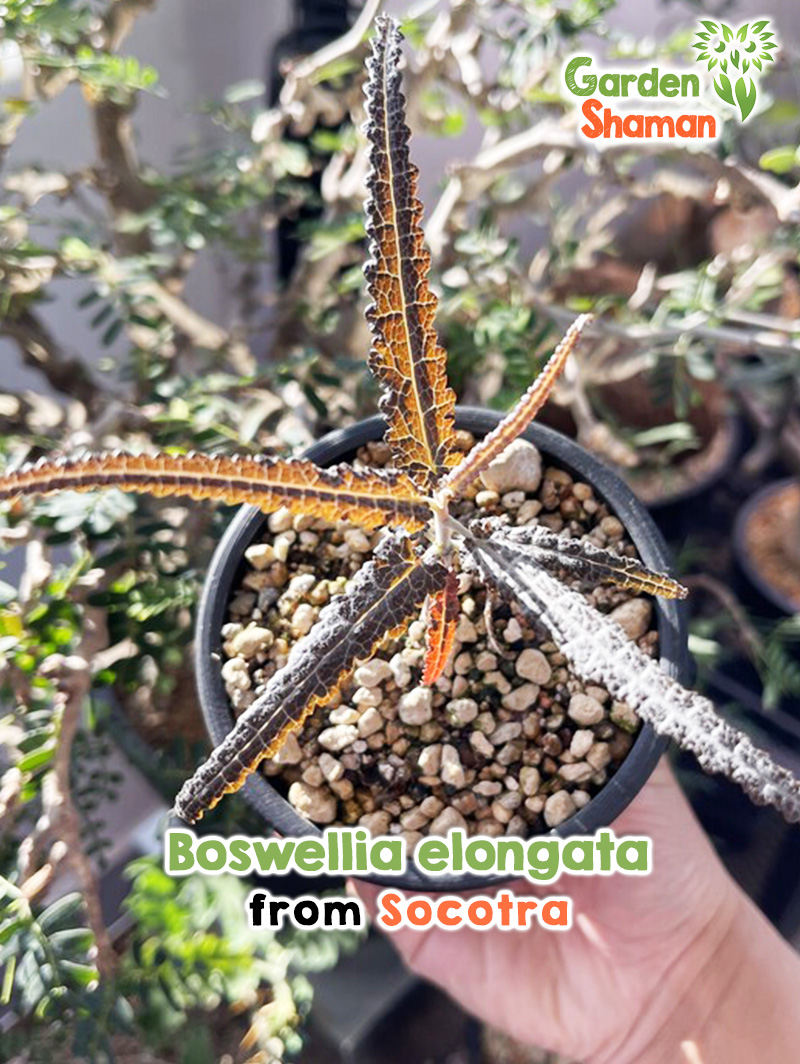
Description Boswellia elongata (Boswellia elongata) - Seeds Species (trade name): Boswellia elongata Family: Burseraceae Synonyms: Long-leaved frankincense tree Original origin: South Arabian region / Socotra Type of use: Ornamental and ethnobotanical plant, collector's species Seed information Origin: Socotra Harvesting the seeds: 2025 Germination period: 2-6 weeks seeds per serving: 5 pieces - Larger quantities on request! Boswellia elongata is a common trade name for a long-leaved, slender-growing form of Boswellia from the south-western Arabian region or from the island of Socotra. It is characterized by its narrow, elongated leaflets and comparatively delicate, elegant growth. Compared to stockier species such as Boswellia nana this form is much airier, with longer internodes, finer foliage and an overall more „tree-like“ appearance. It is particularly appreciated by collectors who are interested in morphological diversity within the incense family. Use Collector and lover plant ethnobotanically interesting species Ornamental plant for greenhouses and conservatories Research and conservation projects for rare species The plant is primarily cultivated for botanical and aesthetic reasons rather than for the commercial use of resin. Growing the seeds The cultivation of Boswellia elongata is similar to that of other drought-loving Boswellia species and requires a very well-drained substrate and controlled humidity. Substrate: very mineral (e.g. 60 % sand, 30 % pumice or gravel, 10 % low-humus soil) Sowing: Place the seeds on the substrate and press down lightly Humidity: evenly slightly moist, no waterlogging Temperature: ideal 22-28 °C Light: bright, no direct full sun on seedlings Germination time: usually 2-6 weeks After germination, the young plants should be slowly acclimatized to drier conditions. Too much water is the most common mistake and quickly leads to rotting. Worth knowing �� Many Boswellia populations in southern Arabia show an enormous morphological diversity. Local forms differ greatly in leaf size, growth habit and resin production. Trade names such as „elongata“ are often used to distinguish these forms, even if they have not (yet) been botanically described as a separate species. For collectors, it is precisely this diversity that makes them so attractive: Each plant develops its own character, depending on location, cultivation and genetic origin. Legal notice These seeds are offered exclusively for botanical, horticultural and collector's purposes. The cultivation and possession of certain plants may be subject to legal restrictions in individual countries. Please inform yourself in advance about the applicable regulations in your country.