Beiselia (Beiselia mexicana) seeds - Rarity!
$ 99.94
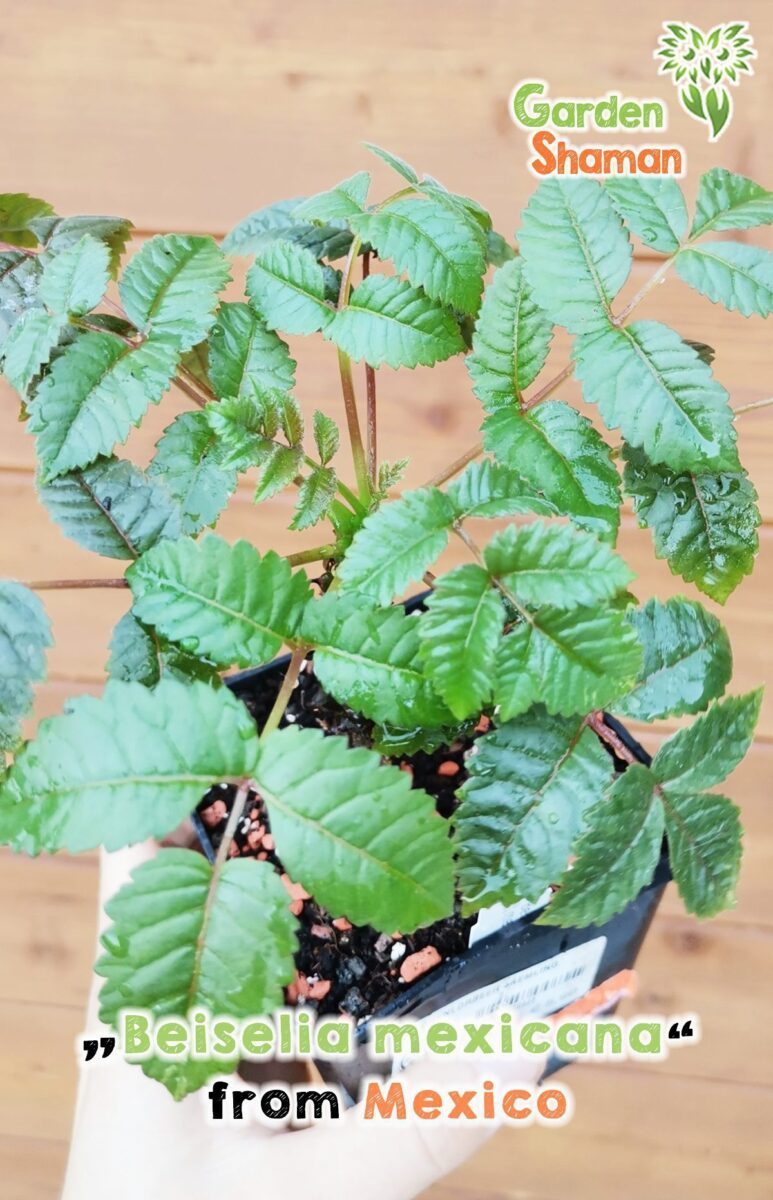
Description Beiselia mexicana – seeds Seed information Origin: Mexico Harvesting the seeds: 2025 Germination period: 21–60 days at 24–30 °C seeds per serving: You can choose between 3 and 5 seeds – larger quantities available on request! Information on the species Family: Burseraceae (balsam tree family) Synonyms: none – accepted name Mexican beech Forman Original origin: Mexico (central and southern regions, dry and cloud forests) Type of use: Rare ethnobotanical ornamental and collector's plant General description �� Mexican beech is one of the rarest species of the Burseraceae family and is found in the wild only in limited areas of Mexico. The small, evergreen to semi-evergreen tree is closely related to frankincense trees (Boswellia) and Palo Santo species (Bursera) and shares many characteristics of this resin-producing family line. The plant forms attractive, feathery leaves with a fresh, light green color and grows slowly in its youth, later developing into an elegantly branched shrub or tree with decorative bark. Like many Burseraceae species, it also produces Mexican beech aromatic resins, but in smaller quantities. The species is botanically very interesting, as it occupies an intermediate position within the family and is considered a link between African and American resin trees. Cultivation & care �� The seeds require warmth and patience. Soak them in lukewarm water for 24 hours before sowing. Then sow them in a mineral-permeable substrate (e.g., pumice, sand, perlite, a little humus). Germination occurs at a constant temperature of 24–30 °C within 3–8 weeks. Consistent moisture (not wet!) and good air circulation are crucial. Mexican beech Prefers warm, sunny locations, but is more sensitive than Bursera or Commiphora when young. With age, it develops a robust, drought-resistant nature. In Central Europe, it is kept as a container plant that must be overwintered frost-free (at least 46°F). It is ideal for succulent gardens, ethnobotanical collections, and lovers of unusual woody plants. Use �� As an extremely rare species of Burseraceae, it stands Mexican beech It is primarily of interest to botanists, collectors, and those interested in ethnobotany. Its aromatic resin has traditionally been used locally as a lightly scented incense, but never to the same extent as frankincense or palo santo. Rather, it is a „botanical treasure“: a living relic of the resin-producing flora of Mesoamerica. It is also impressive as an ornamental plant thanks to its elegant, tropical succulent growth, light green, feathery foliage, and high adaptability to dry soils. Anyone who cultivates Bursera, Boswellia, or Commiphora will find Mexican beech a rare addition to this fascinating plant family. Worth knowing �� Mexican beech was first scientifically described in the 20th century and is still considered one of the least common species in its family. It plays a special role in phylogenetic research, as it combines unique characteristics of African incense trees and American palo santo species. Its resin has a mild resinous-lemony scent and was traditionally used in small quantities for cleansing incense. The species grows naturally in hard-to-reach dry forests and fog zones in Mexico, which explains its extreme rarity. Due to its unusual growth and botanical significance, it is now considered a real collector's rarity – a plant for connoisseurs, ethnobotany enthusiasts, and lovers of resin-forming species. �� Free seeds with every order! ℹ️ Important note Despite careful checks (germination capacity, storage, freshness), we cannot guarantee germination - too many external factors play a role in cultivation. Please inform yourself before purchase about the laws and import regulations applicable in your country. Where permitted, our seeds are intended exclusively for plant propagation. You can find further information in our terms and conditions or directly by e-mail: [email protected] ��